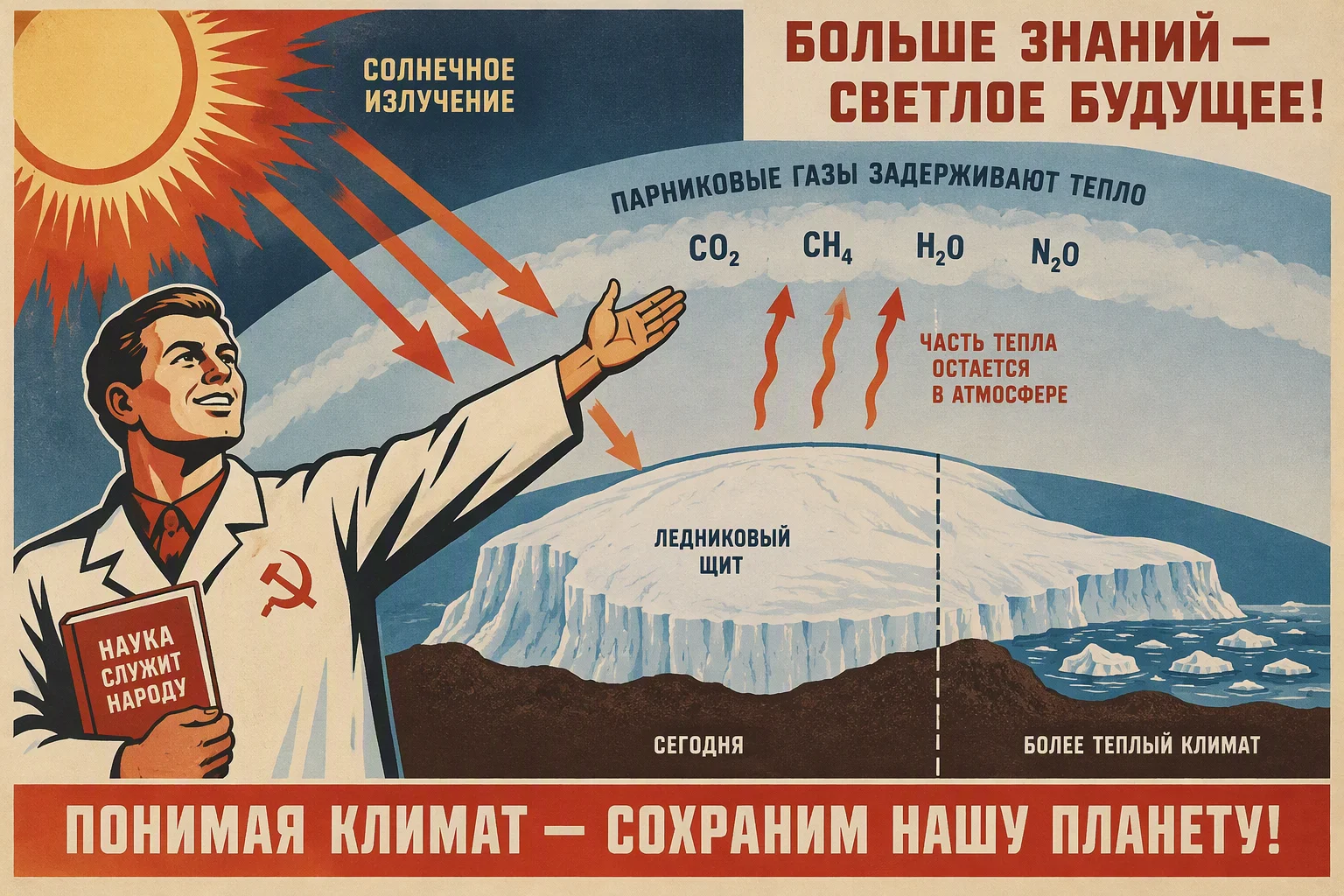
What controls an ice sheet's transient sea-level sensitivity?
Modern ice-sheet models are often tuned to reproduce the present-day shape and extent of an ice sheet. But does matching today’s observations guarantee reliable predictions of tomorrow’s change?
In this project, we will investigate whether ice-sheet models that appear equally realistic can nevertheless show very different sensitivities to climate forcing.
Using idealized ice-sheet simulations, we will generate ensembles of model configurations that reproduce similar present-day geometries. We will then perturb the climate and examine how strongly each model responds.
Students interested in ice-sheet modelling may choose to investigate calving and marine ice-sheet processes, which can strongly influence ice-sheet stability and can sometimes lead to similar large-scale behaviour despite important differences in the underlying physics.
Possible project components include:
- Running ensembles of idealized ice-sheet simulations.
- Perturbing surface mass balance and ocean forcing.
- Comparing geometric fit and dynamical sensitivity.
- Exploring which observable quantities provide the most information about future response.
- Investigating whether a good match to today’s ice sheet implies reliable future projections.
The project combines glaciology, climate science, numerical modelling, and uncertainty quantification.